How Utah Lawmakers Quietly Deleted Your Ability to Say ‘No’ – including a surprise actor
The Stratos datacenter fight is not only about water, power, land, or Kevin O’Leary’s political connections–those things matter. But the deeper story is how ordinary citizens became the least powerful players in the whole affair.
At a special Box Elder County Commission meeting held Monday, May 4, 2026, at 4:00 p.m. at the Box Elder County Fairgrounds, around 1,500 residents and protesters packed the room to oppose the proposed Stratos data center project. The commission nevertheless voted unanimously to approve two resolutions allowing the project to move forward. Commissioner Lee Perry later said the project could have proceeded even without the county’s approval, stating that his vote was intended to give Box Elder County “a seat at the table.” The first official mention of the project to the County Commission was reportedly on March 25th, and the public was only notified sometime later. There was very little time to get information on the project, to organize and to show up to protest. In other words: residents hurriedly cleared their schedules and showed up en masse to say no, only to be told that the fix was already in.
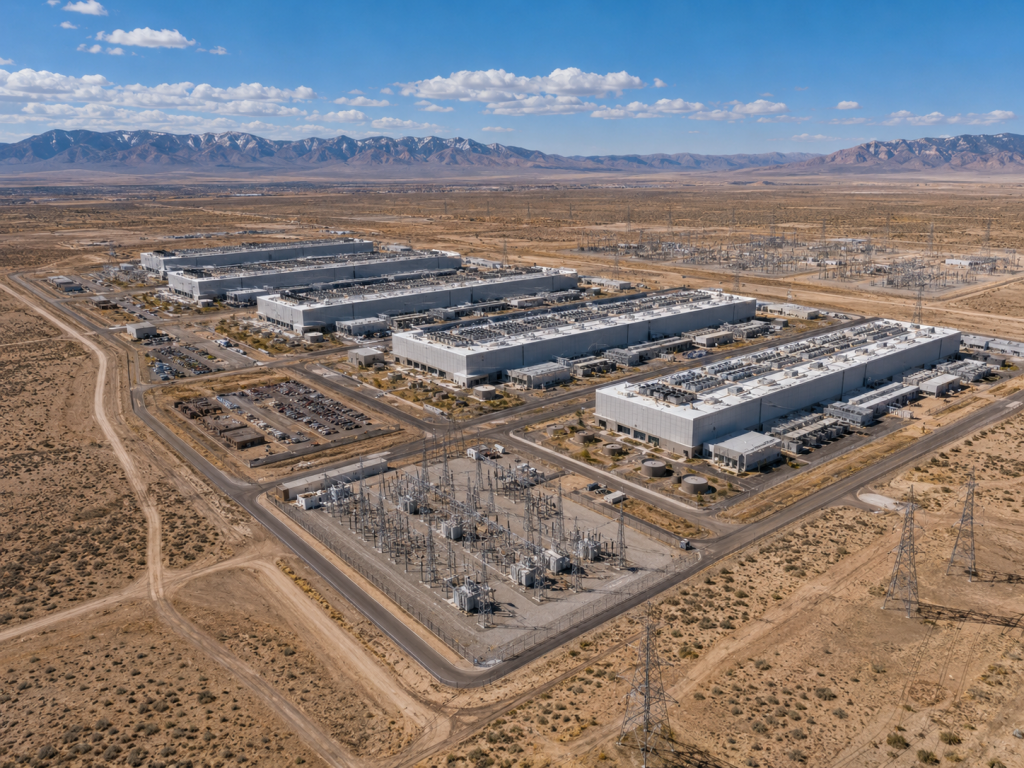
Stratos is a warning flare for all Utahans. It shows what happens when Utah combines a powerful development authority, short notice and challenge windows, narrowed standing, and governmental immunity for projects that a select few who already have a “seat at the table” have greenlit.
If all we covered in this article was MIDA and Stratos, we would risk merely fueling the inadequate narrative of “datacenters bad”. The truth is much worse, and it is closer to home than you think.
I could cite the legislation that created MIDA and set it up as a bottomless rulemaking and taxing entity that operates without your representation or consent. But that would confuse the cart with the horse. There is a whole underground web of tunnels and secret passages in the legal code beneath MIDA and Stratos that undermines your ability to say no to literally anything the government approves.
We could talk about the bill sponsored by Senator Sheldon Killpack and carried in the House by Representative Brad Dee that created MIDA in 2007. We could highlight the roles of Senator Jerry Stevenson and Representative Val Peterson that created the very narrow 30-day window for protesting MIDA projects and expanded their power. But even all of that is mere icing on the cake compared to what the legislature has been building. They already have a complete legal defense suite put together that immunizes them against public pushback from projects just like Stratos–or any other mass injury to the people’s rights. It was spearheaded by a more-than-honorable mention you might find shockingly familiar from a different setting.
Let’s explore some of the layers of that cake.
SB 203, sponsored in 2025 by Sen. Brady Brammer with Rep. Casey Snider as floor sponsor, claims to codify a “traditional standing requirement”, the ultimate definition of which is deferred to the Utah Supreme Court, but is outlined in the bill as “injury in fact, causation, and redressability”. That may sound technical, but it means that shared public harms—potentially including mishandled water rights, ratepayer risk, air quality, tax diversions, environmental impacts, and loss of local control—can be treated as too “generalized” an injury to sue over, no matter how real, catastrophic and collectively appalling those harms might be. Despite the pretenses to authority by appealing to tradition, these kinds of limitations on citizen standing to sue government entities did not exist at the founding of our nation. The so-called “traditional standing requirement” evolved later as a matter of court precedent in connection with the doctrine of judicial supremacy. The fact is, SB 203 violates the Utah Constitution’s Article I Section 11 by limiting your ability to sue and petition for real redress. Injury, causation and redressability are factual claims that are rightfully triable by a jury. By frontloading those decisions to gatekeep who can even initiate a lawsuit, SB203 usurps the sacrosanct right of the people to have their verdicts decided by an impartial jury, deciding most suits in the government’s favor before they can even be issued.
SJR 9 (2025), sponsored by Brammer with Rep. Jordan Teuscher as floor sponsor, restricts your ability to obtain temporary restraining orders and preliminary injunctions to suspend the operation of a law after it takes effect. It imposes a 90-day blackout period on constitutional challenges as soon a law takes effect and people can begin to see how the law is actually enforced in practice. An argument in favor of this bill took the form of saying that people were being so annoying by waiting until after a law took effect to challenge it, and that created work for the legislature. Because, you know, standing up for our constitution to prevent irreparable harms to the people is clearly frivolous, and it’s just so easy for the people to throw together a civil lawsuit in a couple of weeks after they find out what the final version of a bill is. We clearly don’t need the ability to suspend the operation of laws until they have had 90 days to work their magic.
Maybe we not only need to pass bills, but also enforce them to find out what is in them.
HB 79, sponsored by Rep. Matthew Gwynn with Brammer as Senate floor sponsor strengthens the governmental-immunity backdrop by granting government workers immunity to lawsuits for harms caused while responding to a “disaster or potential disaster”, with retroactive application back to 1985. That matters because MIDA is a political subdivision and public corporation. If citizens sue after harm occurs, immunity rules help decide whether there is any remedy at all, including after the fact. This closes the window for any past harms caused under these headings. Under this law, a government or quasi-governmental entity can take advantage of disasters and even create imaginary “potential disaster” conditions to pretend you have no right to sue them for any harms they cause along the way.
HB 392 shifts venues for many constitutional challenges to a judicial panel of the government’s choosing, deleting the right of most judges to suspend or challenge unethical procedures in such cases.
HB 330 is perhaps the most egregious of all: It grants an “affirmative defense”, a very effective insulation against liability, for harms caused that were “legal at the time”. It essentially deletes the ability of the people to sue the government for damages at common law. This danger is impossible to overstate, since the immunity becomes practically infinite depending on judicial interpretation. Can you sue the government at all anymore? Only in a vanishingly thin, perhaps only theoretical slice of cases.
And there is much more.
These are not constitutional or common-sense protections, they form a very novel and coordinated strategy for immunizing the government from liability and locking citizens out permanently from redress. These are symptoms of a most paranoid government. It is likely impossible to overstate the damages this exact framework lets the government and its PIDs and MIDA projects as well as even federal agents to get away with.
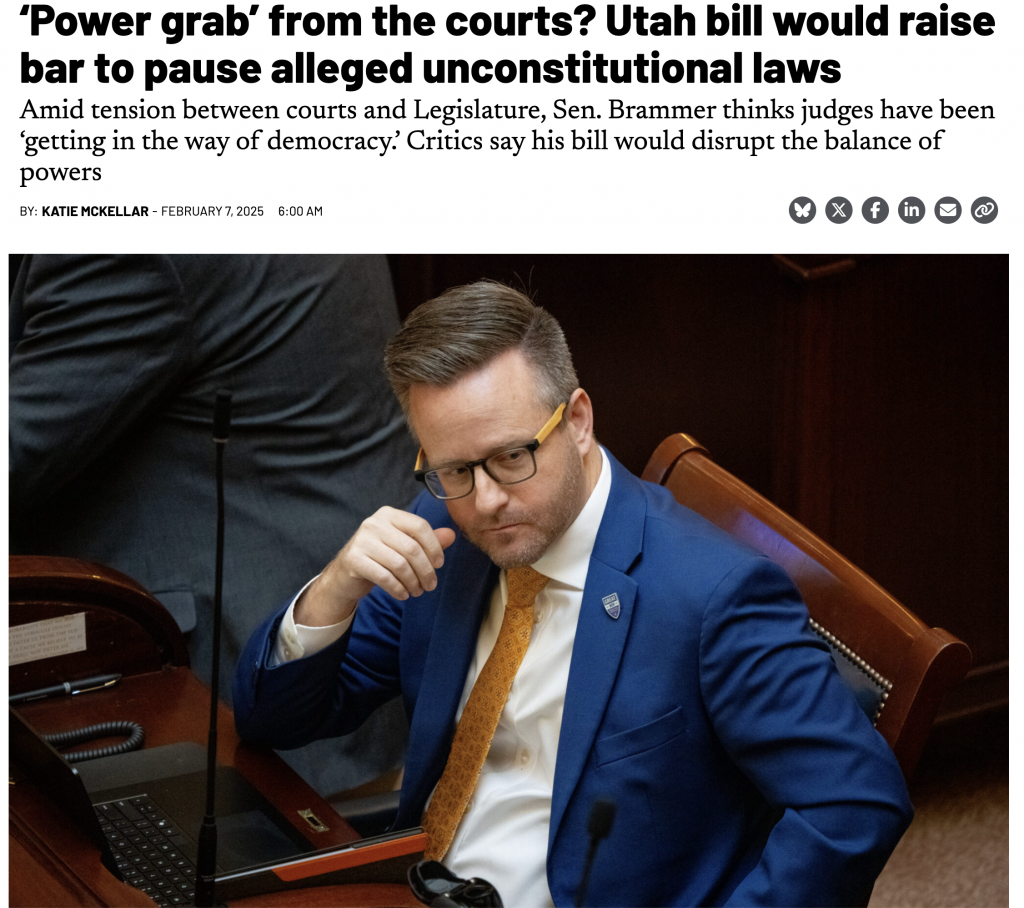
Did you notice who is behind many of these bills? Somebody you might not be aware of: Senator Brady Brammer, with his signature move, narrowing the courthouse door.
Am I saying that Brady Brammer is the key person behind MIDA, Stratos and related projects? No, but he is playing a very significant supporting role by whittling down our ability to resist PIDs and other projects and government actions generally. If anything, legislation he has sponsored and supported creates a minefield of obstacles to legal challenges that are far more extensive in scope and potential for harm than all the datacenters in the world combined. Brammer has given lip service to open access to courts and trial by jury, but all of these bills functionally narrow access to remedies, including limiting access to juries. Under this framework, you can try to challenge an unconstitutional law, but you will likely be told:
“You can’t, it’s too late”
“But that would create work for us”
“You’re not the right person to stop us”, or
“I was just following orders”.
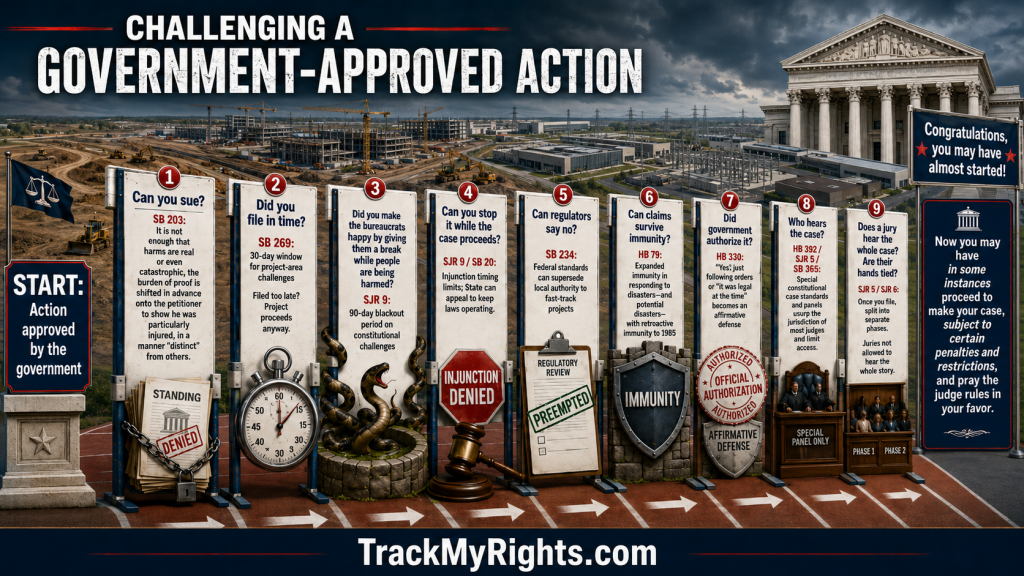
What Brammer and his minions have installed is a call center Hell in the most sacred venue of government: The place where historically, under the real constitutional republic of our founding fathers, you could say “No” and actually have it honored. Instead, the right of the people to seek redress and obtain relief from unconstitutional laws has been replaced with bottomless passing the buck, narrowed standing, and outright refusal to do justice because it is viewed as “inefficient”.
That is the quiet deletion of “no.” The public can protest. The public can comment. The public can pack the room. But if they cannot get standing, they cannot get relief. The Utah legislature has been installing a police state right under our noses.
The real question for every Utah voter is this:
At what exact point could ordinary citizens stop a project like Stratos by binding legal right—not merely by comment, protest, or political pressure?
If no one can answer that clearly, then the problem is bigger than a 62-square-mile data center. It is the quiet erasure of the people’s practical right to say “no.”
This didn’t happen overnight or in a vacuum. There were signs.
Utahans should be asking Brammer why he is erasing our ability to say no to the government.
His constituents can attend a town hall on June 11th from 6 to 7:30 p.m. at 2600 W. Executive Pkwy #140, Lehi.
I have rejoined the SD21 race as a write-in candidate to restore the option to say “no” to the government. My name is Seth Stewart. You are invited to join the fight for freedom as well.
As with so many deletions and limitations on our rights, The solution is in the Constitution. Study defendant rights and what existed before these immunity doctrines and judicial precedent that narrowed citizen plaintiff and defendant rights. There is no authority to gatekeep citizens from being able to sue their governments, to challenge laws, to suspend the operation of unconstitutional laws, and to obtain relief for harms caused, no matter by whom. Trial by jury, Thomas Jefferson said, is the only way we can hold our government to the principles of its Constitution. After watching multiple years of our state legislature deleting our rights and ramrodding hundreds of unconstitutional laws onto the books, I am forced to agree with Jefferson. There is no holding our government accountable as long as we do not have and exercise the right to trial by jury in every contest between the people and our government. It is impossible to overstate the importance of this reality. We can only have these rights taken away if we are ignorant of them, or if we do not stand up to claim them while there is time.
Leave a Reply